I'm sure most runners have heard this, and yet, here we are.
You've put in the miles and worn through a couple pairs of shoes. Nutrition is dialed, you've got a plan. And now someone is telling you to go lift weights.
I get it. But after years of coaching people who run, here is what I know. The weight room isn't the problem. You avoiding it is the problem.
Why You Get Hurt
You almost always blame the volume with "It was too much mileage."
It is actually what the miles end up exposing: weak hips, poor single leg stability, a posterior chain that has never been asked to do much of anything. When those gaps exist, your body compensates. And compensation, repeated over enough training, becomes injury. IT band. Knee pain. Plantar fasciitis. The diagnosis changes. The cause usually doesn't.
"But I've been running for years and I'm fine."
Ok then. But we both know more miles, at a faster pace, on a structurally weak body isn't a training plan for progress. It is a countdown.
The Fix
Running economy. How much energy your body uses at a given pace. Strength training lowers that cost, meaning you run faster, or farther, on the same tank. A 2016 meta analysis in the Journal of Strength and Conditioning Research found consistent improvements in running economy among trained runners who added strength work to their programs. More force per stride. Less energy to produce it. Not complicated, just physics applied to a human body.
Injury resilience. Tissue that has been progressively loaded handles repetitive impact better than tissue that hasn't. You don't get hurt as often. When you do, you come back faster.
Late run capacity. Underrated. Form breaks down when you're tired. When form goes, pace goes. A 2025 randomized controlled trial in Medicine and Science in Sports and Exercise found that runners who added strength and plyometric training improved their running economy in the final stages of a 90 minute run, and increased their time to exhaustion at high intensity by 35% compared to the endurance only group.
What's Worth Doing
Runners don't need a bodybuilding program. I'll say that clearly because it is the first objection I hear.
What you need is compound, functional movement: squats, hinges, single leg work, and carries. Movements that train the body the way running actually uses it. Not machines. Not isolation work.
And coaching matters here more than people expect. The point isn't just doing the movements. It is doing them correctly under load and under fatigue, which is exactly when form falls apart. A good coach catches that in real time. A YouTube video doesn't.
Two or three sessions a week, programmed well, is enough. The barrier isn't time. It is usually that nobody has told you what to do or shown you how to do it properly.
Where This Fits
We didn't build a separate runners program at Work Ethic KC. We didn't need to.
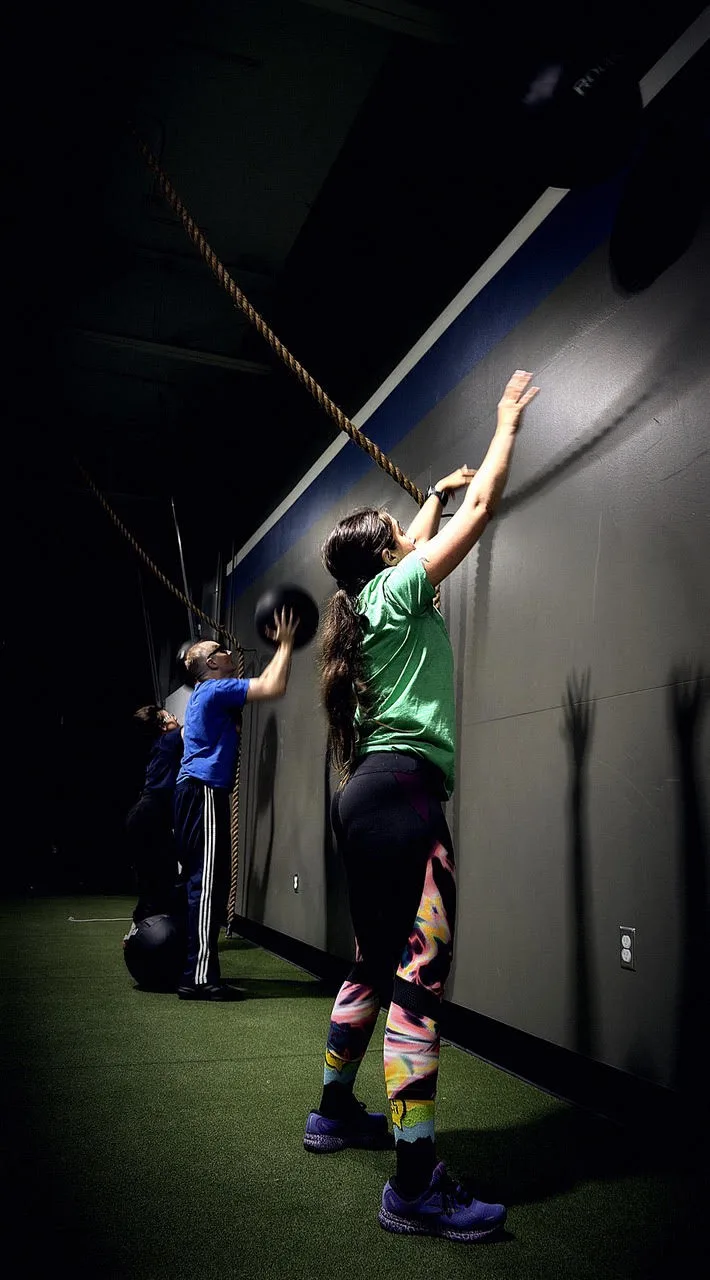
Our group training is built on functional strength work, the kind that transfers directly to what your body needs outside the gym, whether that is a 5K, a HYROX event, or just moving well for the next few decades.
If you've been putting off the weight room, come find out what an hour of coached, structured strength work actually feels like.